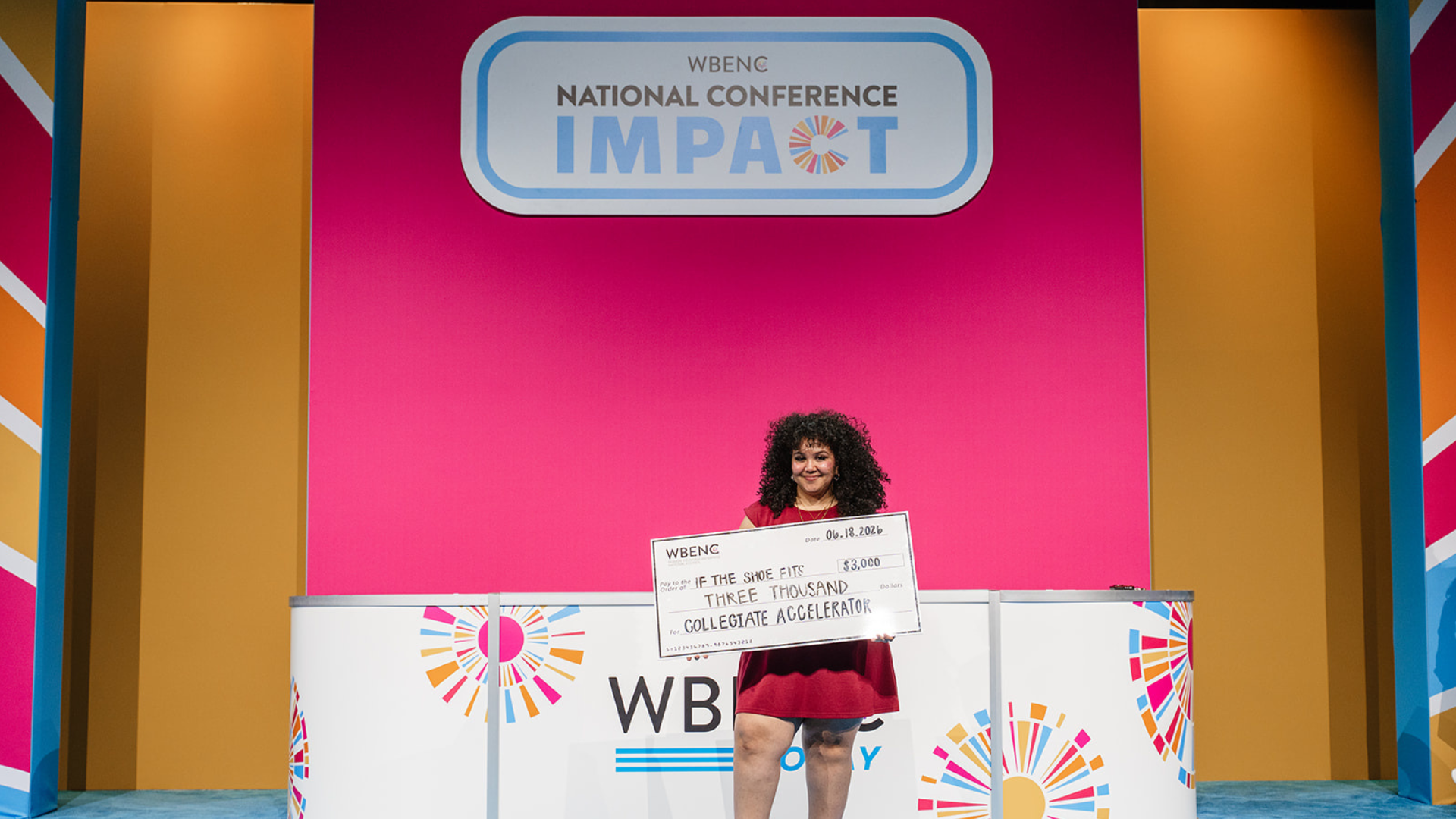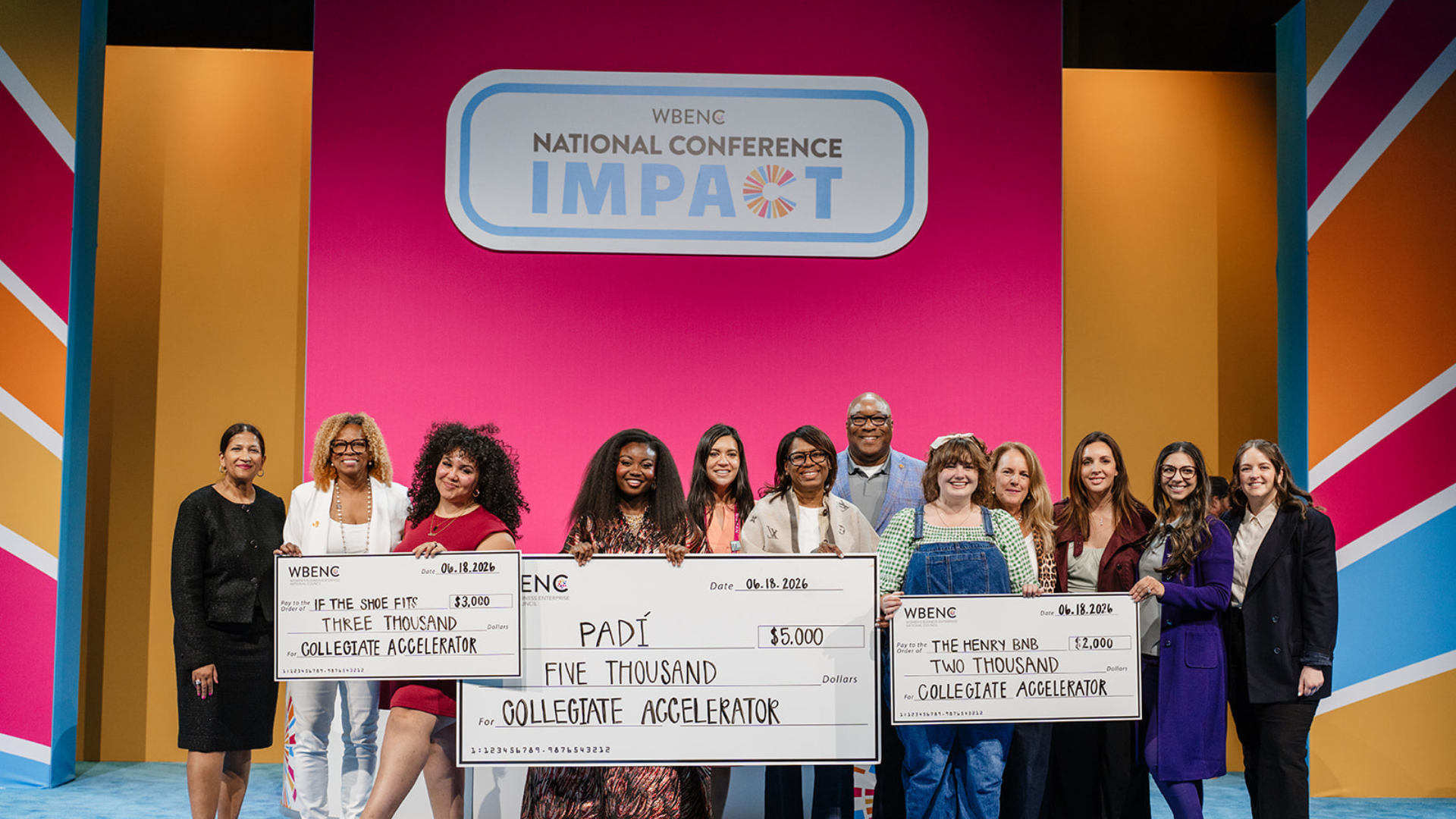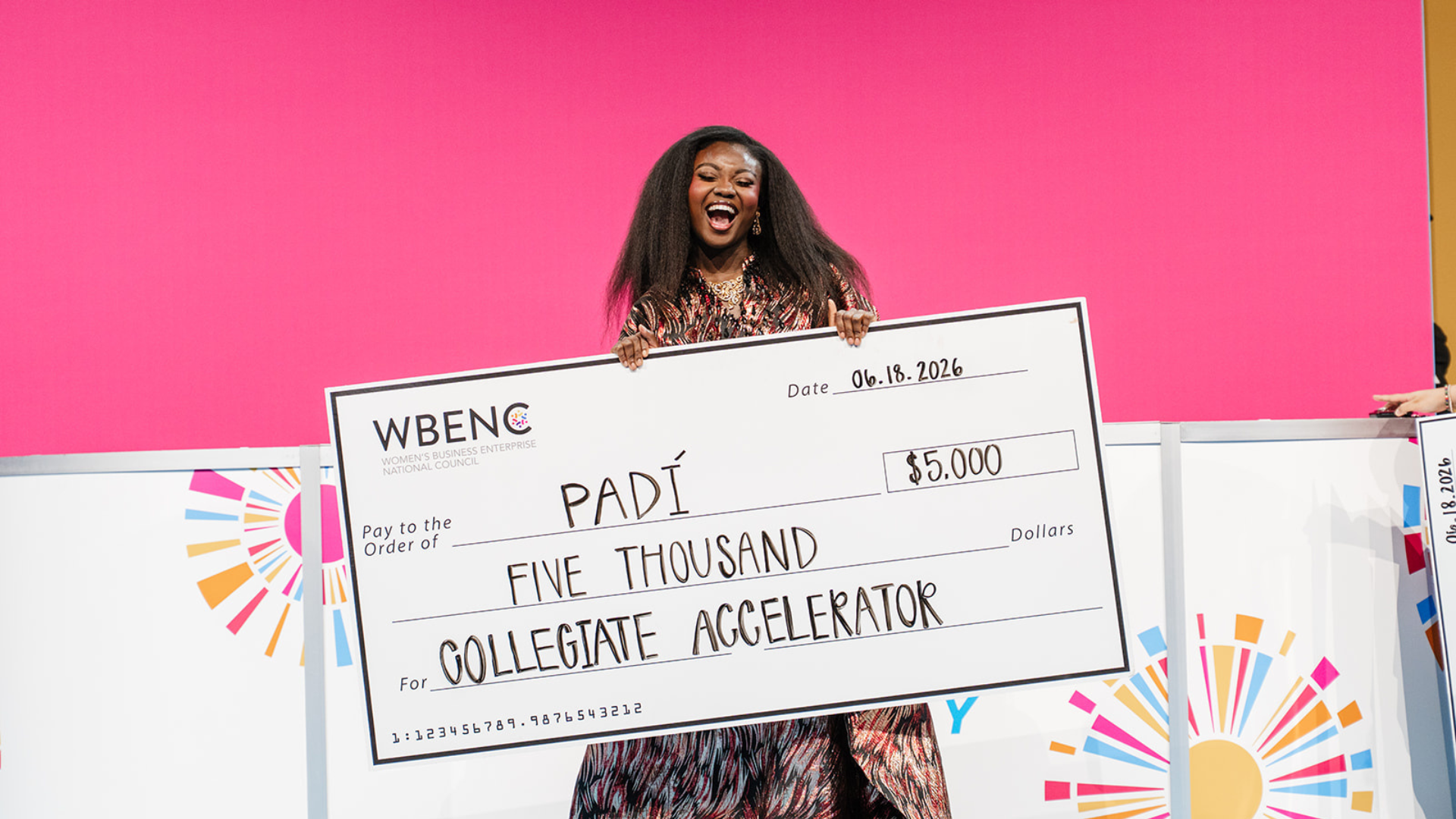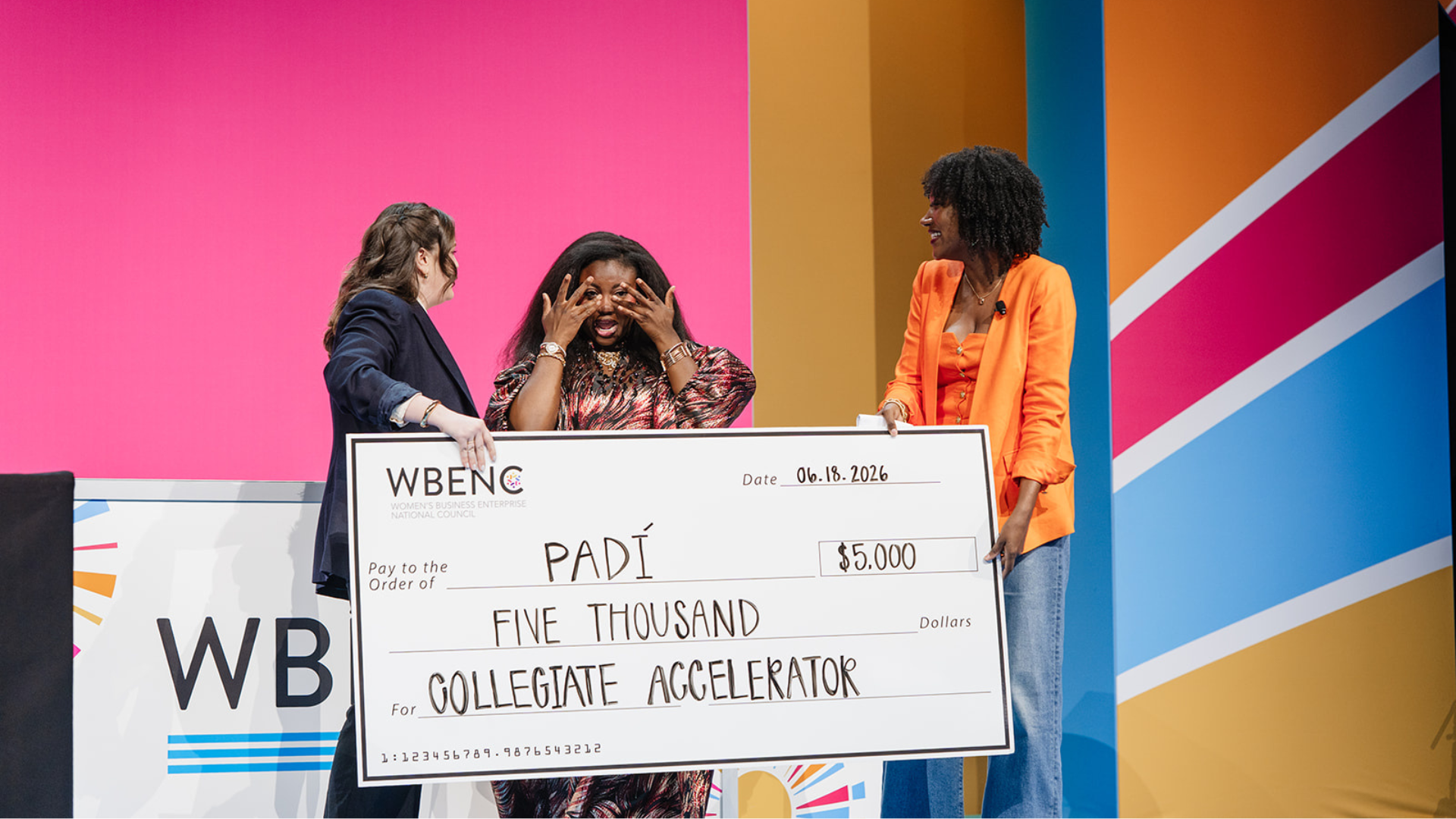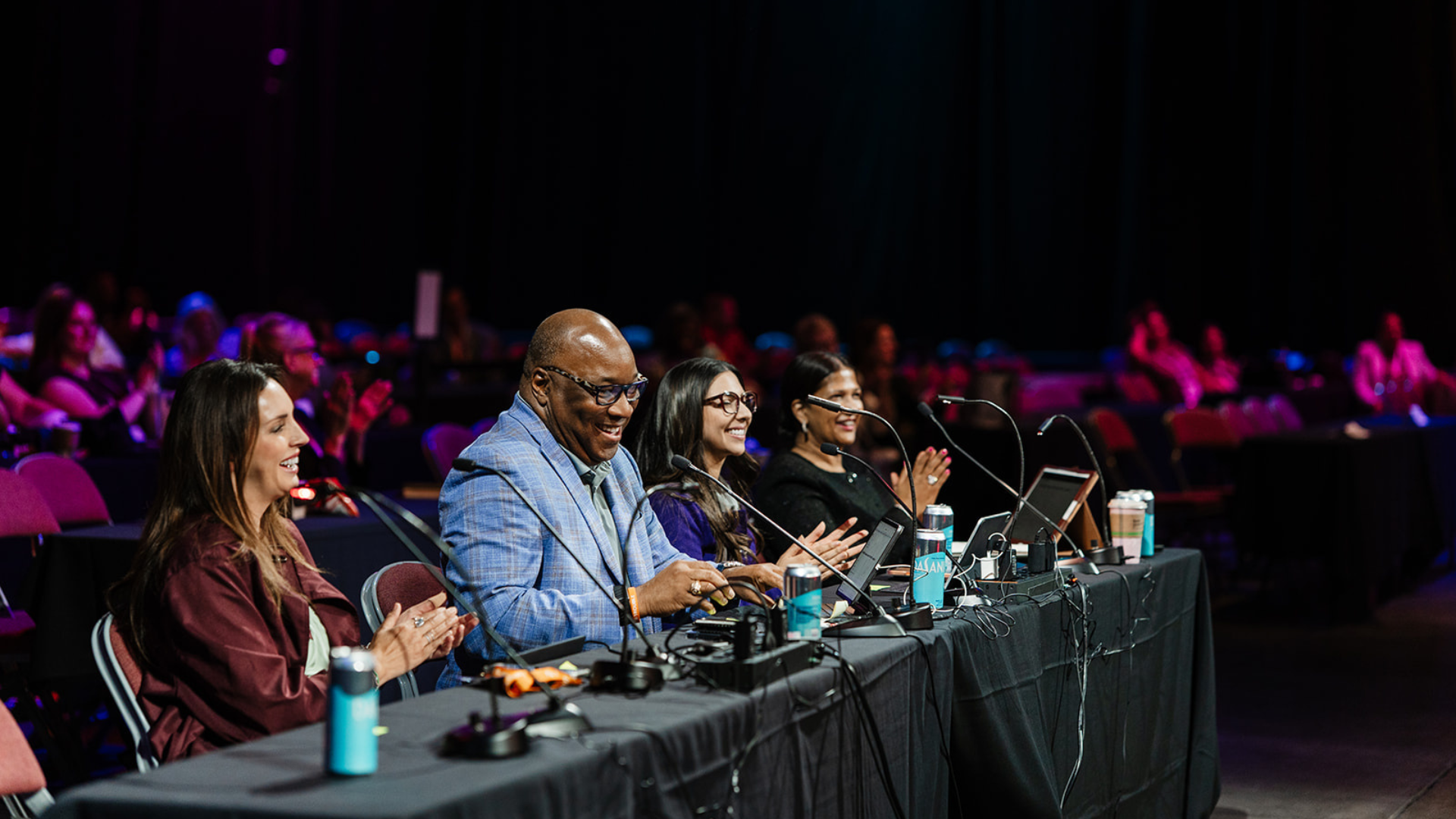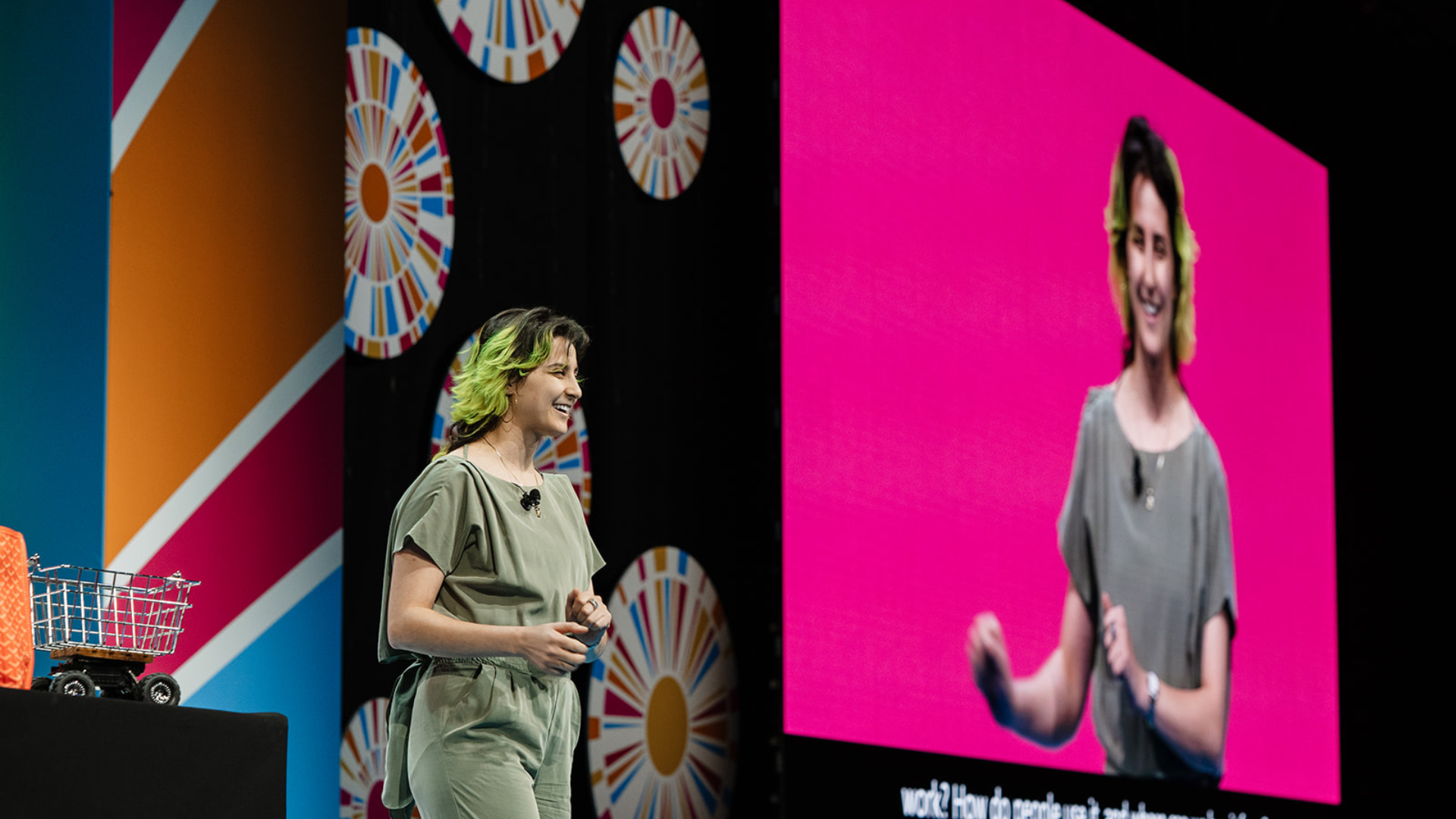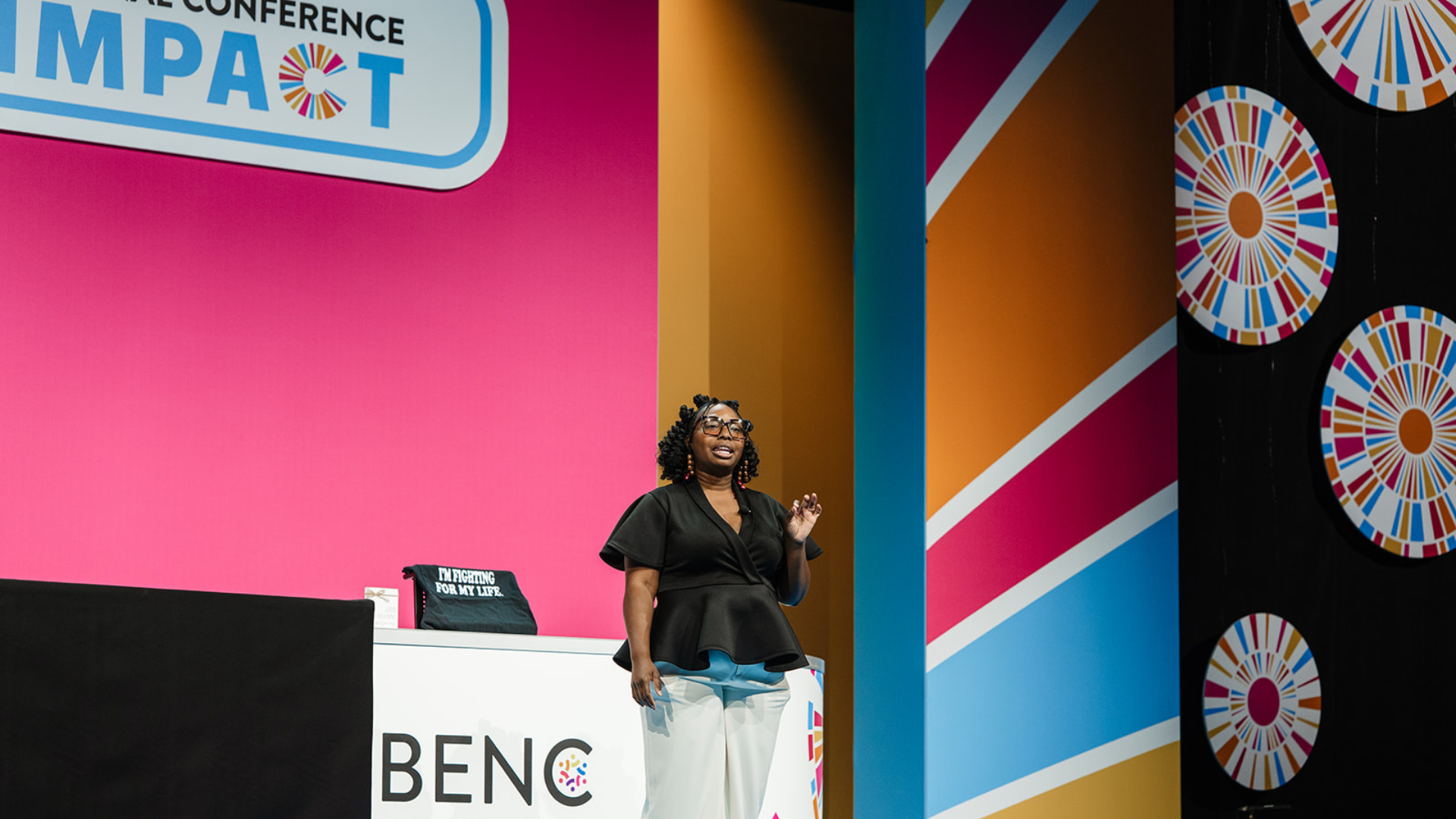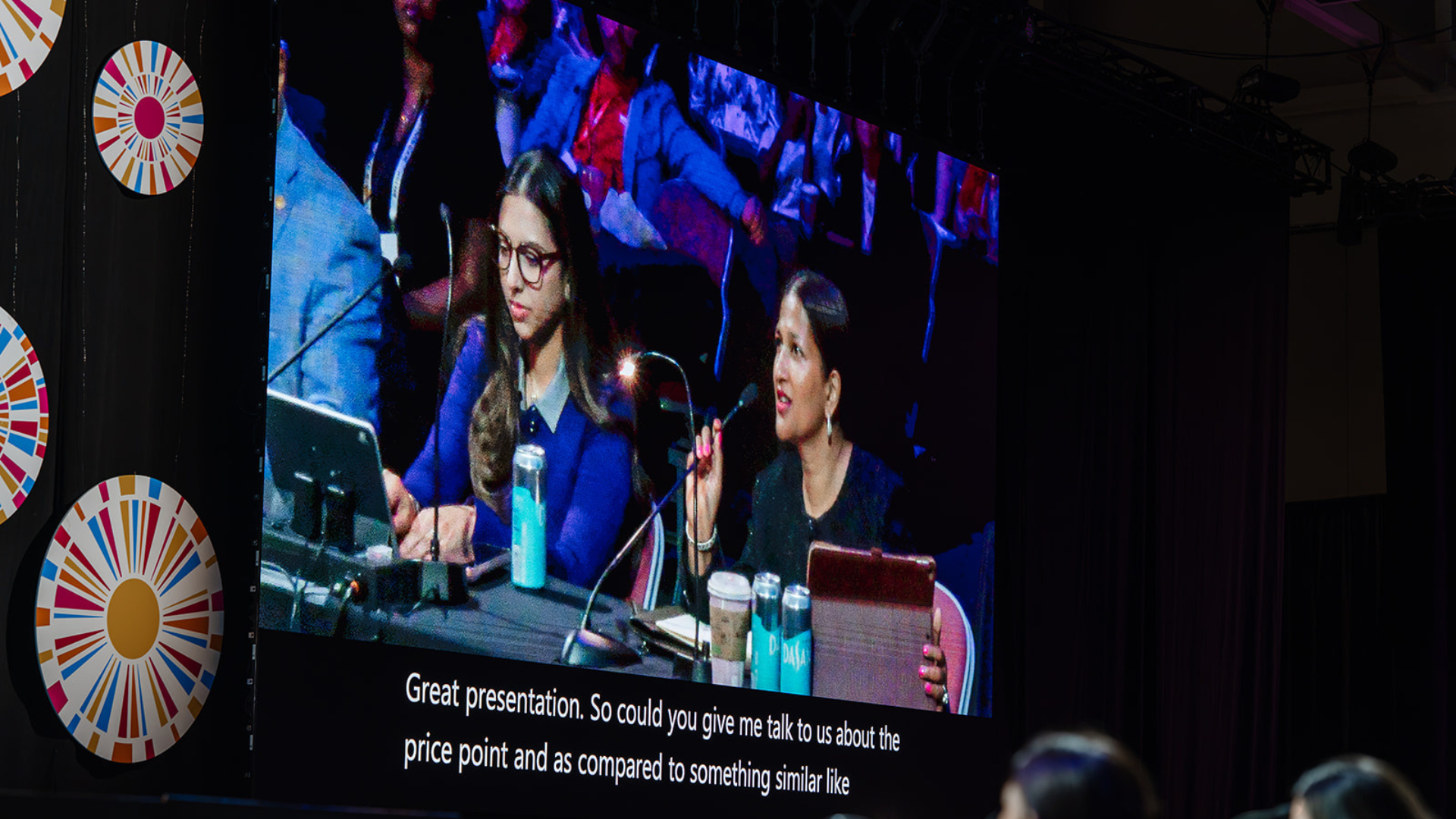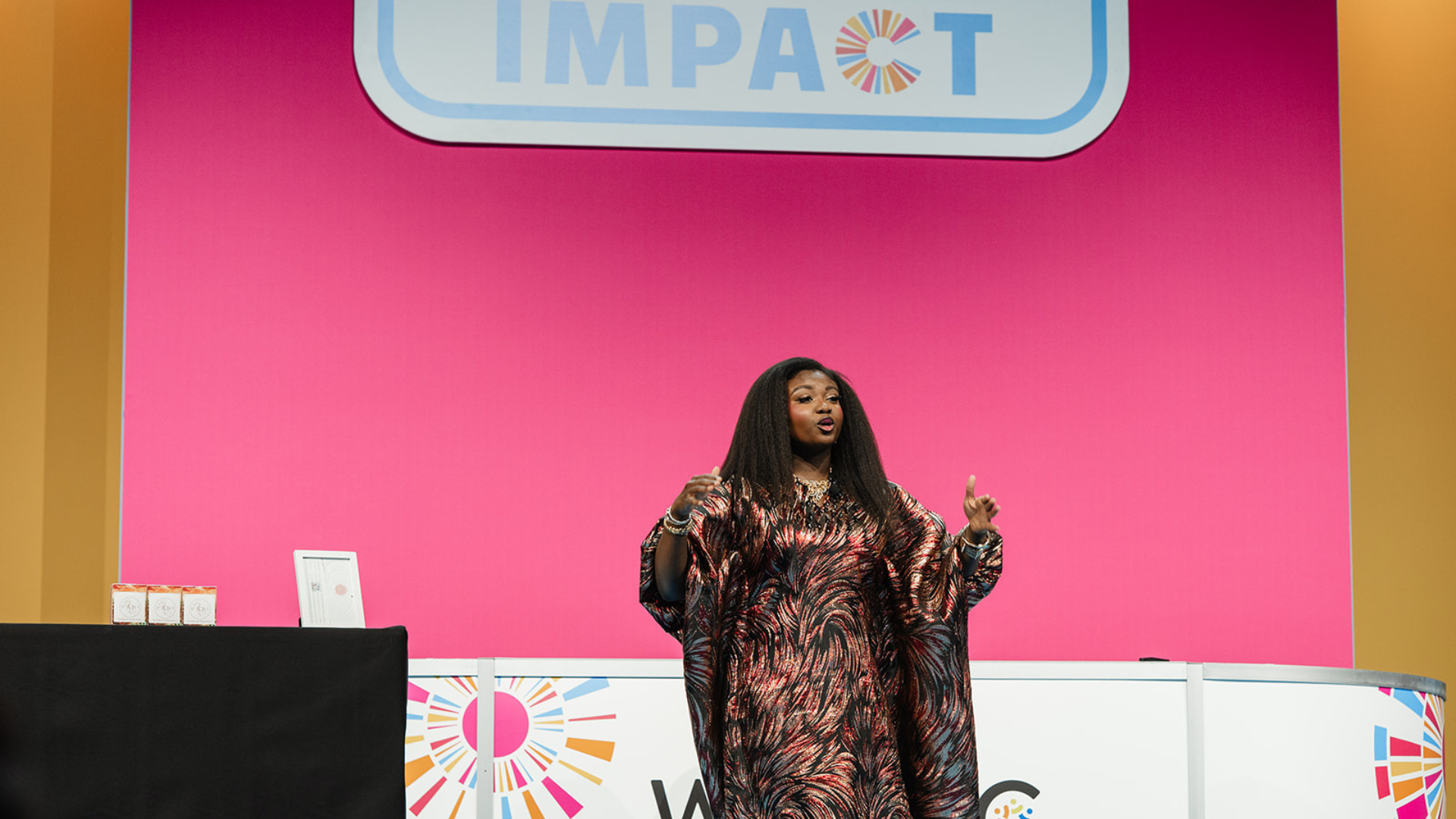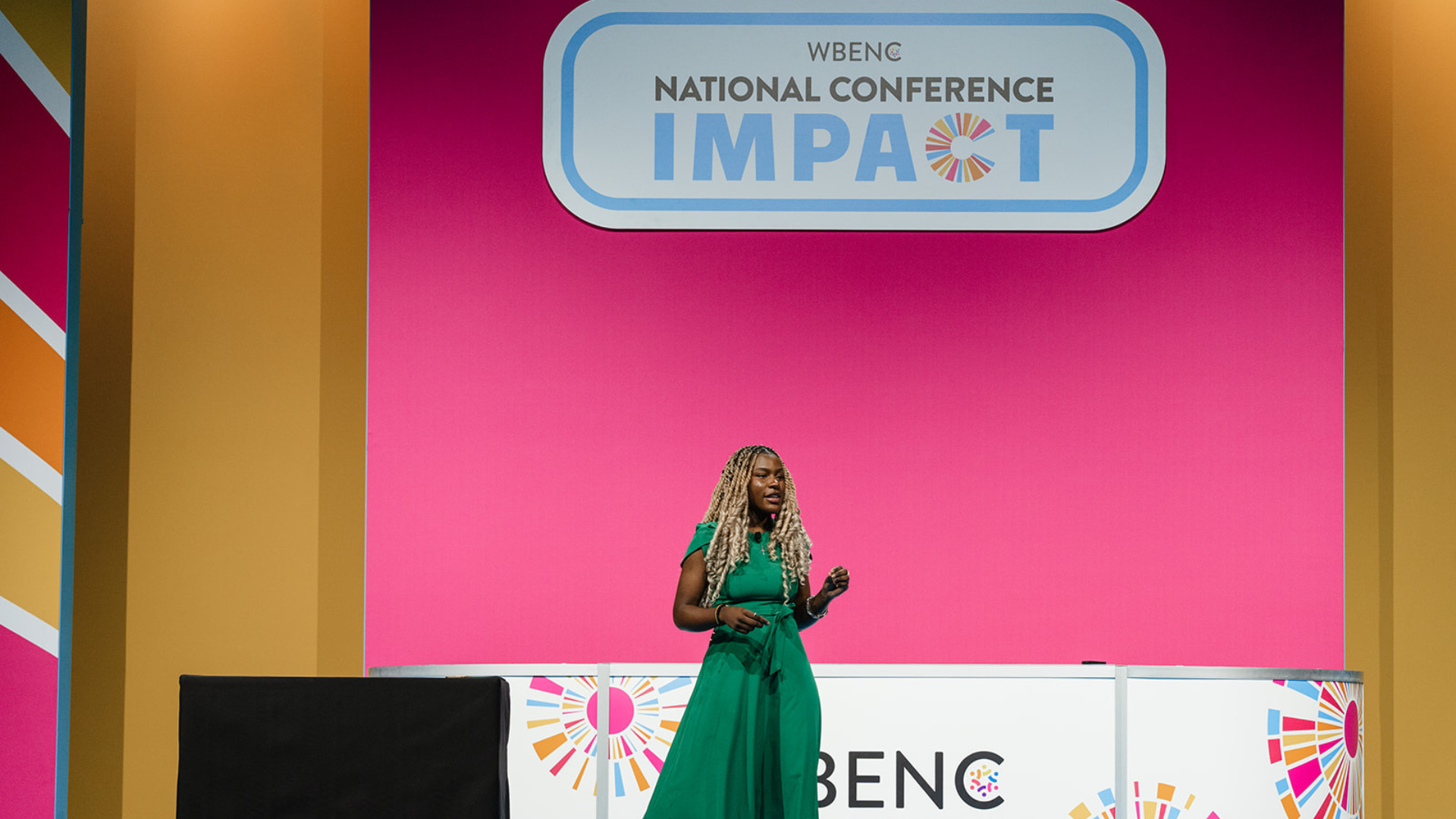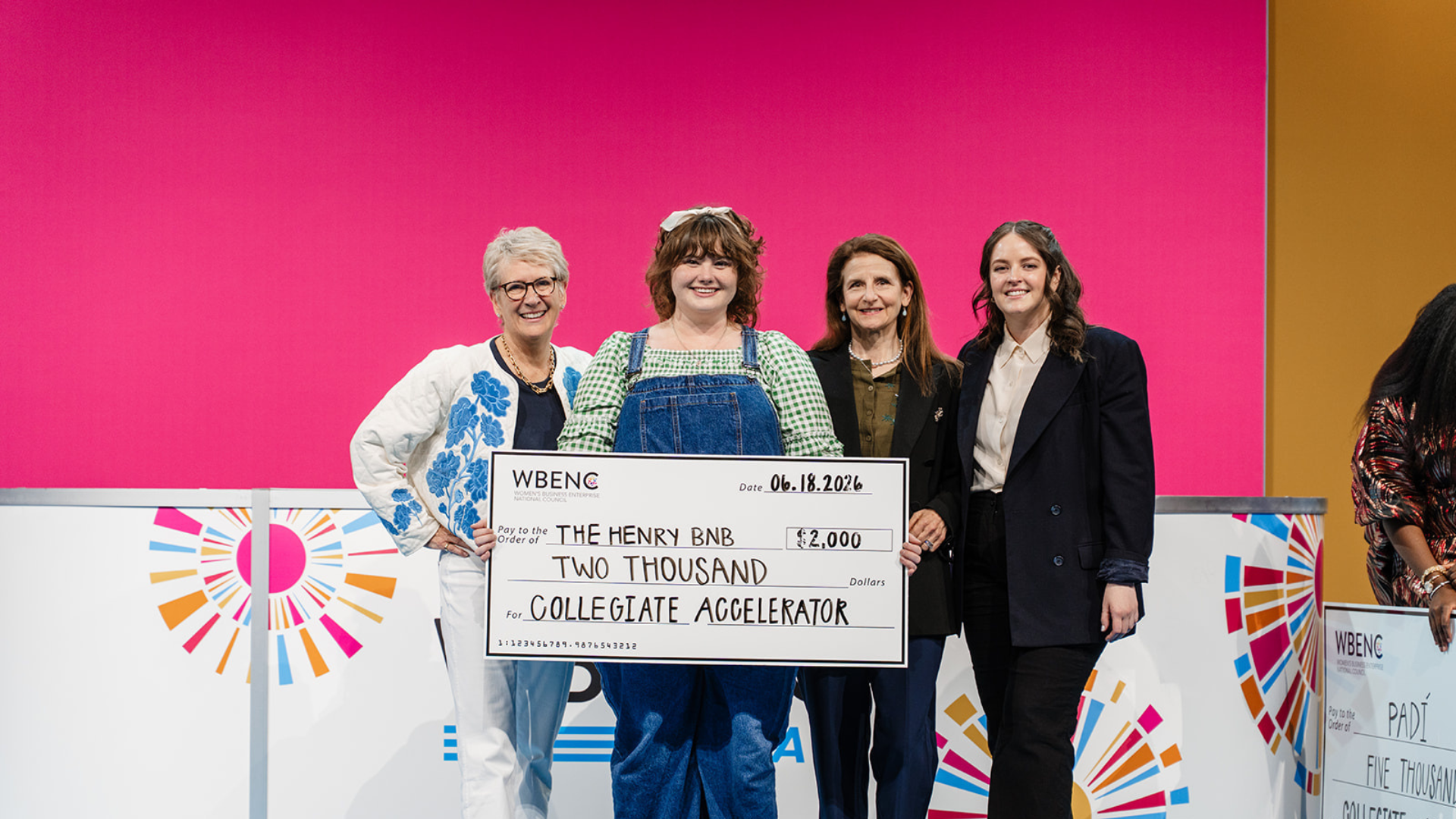

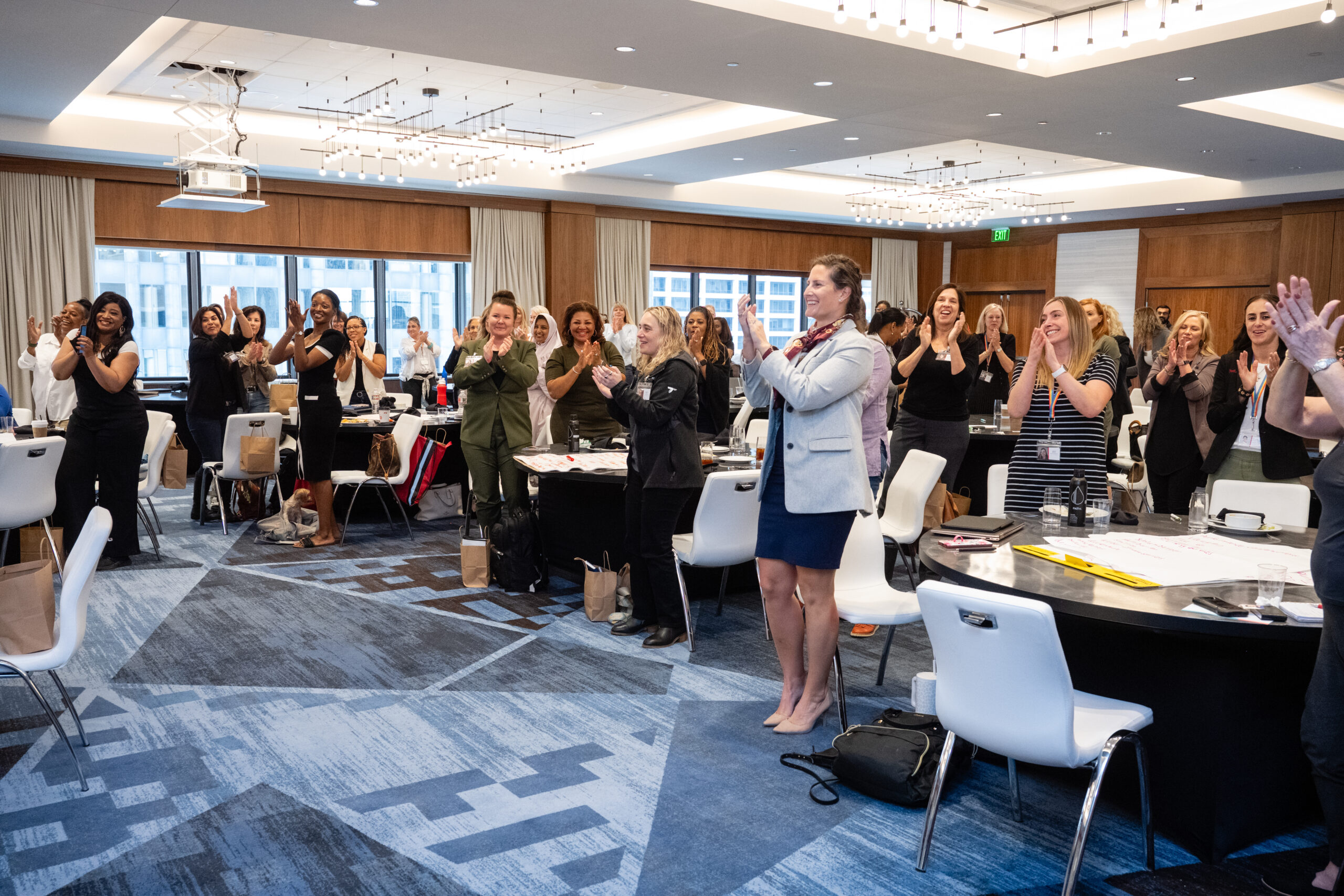
Against the backdrop of Salt Lake City’s iconic mountain peaks, members of the WBENC Collegiate Accelerator gathered at the 2026 WBENC National Conference to represent the next generation of entrepreneurial talent while elevating their early-stage ventures.
Equipped with months of hands-on learning, personalized mentorship, and opportunities to strengthen their business acumen and leadership skills, this cohort of founders arrived ready to engage with WBENC’s ecosystem of corporate leaders, industry experts, and fellow entrepreneurs. The culmination of this experience was the 2026 Collegiate Accelerator Pitch Competition, where founders took the stage to present innovative solutions to real-world challenges, demonstrating the creativity, resilience, and vision needed to drive meaningful impact in their industries and communities.
Read on to meet the top three founders recognized by the judges, learn about the inspiration behind their ventures, and discover how they are transforming bold ideas into promising businesses with the potential to shape the future.
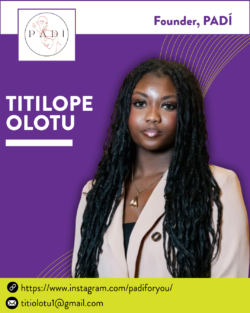 Titilope Olotu, PADÍ
PADÍ is a health technology venture developing noninvasive diagnostic menstrual products that enable early screening for common yet underdiagnosed conditions, including hormonal imbalances, infections, and anemia. By integrating biomarker detection into routine menstrual hygiene products, PADÍ transforms menstruation into an accessible and scalable health monitoring opportunity. An optional AI-powered platform translates sensor data into clear health insights and clinician-ready summaries, supporting earlier intervention and informed care decisions. Operating at the intersection of women’s health, preventative care, and sustainability, PADÍ is committed to expanding equitable access for underserved and underdiagnosed populations.
Contact: titiolotu1@gmail.com
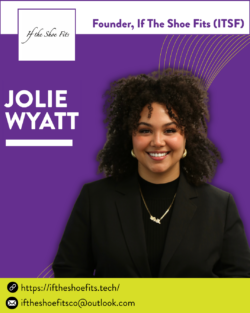
Jolie Wyatt, If The Shoe Fits (ITSF)
If The Shoe Fits (ITSF) is a women-led, tech-driven startup addressing the lack of size and shape diversity within the women’s footwear industry. Through their e-commerce platform, customers utilize Volumental’s 3D technology to take a 60-second scan of their feet. ITSF uses that data to manufacture a custom shoe based on the user’s exact measurements rather than a generic size chart, solving a problem faced by more than 16 million women across the United States. By engineering shoes to fit our customer’s unique foot width, arch, and toe shape, we’re replacing standard sizing with personalized design, allowing comfort and confidence to coexist in one pair of heels.
Contact: iftheshoefitsco@outlook.com
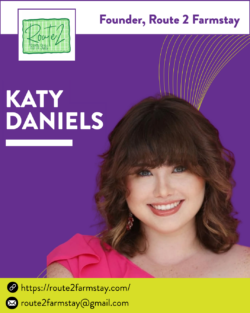
Katy Daniels, Route 2 Farmstay
Route 2 Farmstay, formerly The Henry BnB, is an agritoroute2farmstay.comurism Bed & Barn experience on a century-old family farm in Seymour, Tennessee. Founded by Biosystems Engineering Ph.D. student and farm steward Katy Daniels, Route 2 Farmstay invites guests to experience Appalachian agriculture through interactive farm stays, livestock encounters, gardening, vineyards, and hands-on lessons in canning, sourdough baking, beekeeping, seed saving, and homesteading. The venture preserves family farm heritage while creating a sustainable future for the land and the living traditions of East Tennessee.
Contact: route2farmstay@gmail.com
What inspired you to start your venture, and what are you most proud of accomplishing within your entrepreneurial journey thus far?
Titilope, PADÍ: In November 2024, I hosted a PMDD campaign that reached over 350,000 views across TikTok and Instagram. What followed was an outpour of women sharing experiences with conditions ranging from PCOS and endometriosis to fibroids and beyond. One situation stood out above the rest: twelve women came forward with bacterial vaginosis cases, and six of them had developed antibiotic resistance, meaning antibiotics would no longer work for them. They were told to seek home remedies. In trying to help them, I came across a TikTok trend recommending castor oil applied directly to menstrual pads or tampons. It had no scientific evidence behind it, no proven efficacy, and no safety data. I realized that if a young girl tried this and it failed, she could seriously harm her vaginal health. That moment made everything clear. Women were being failed by the medical system and turning to unvetted solutions out of desperation. That is what PADÍ was born from: not a business idea, but a responsibility.
Katy, Route 2 Farmstay: I started Route 2 Farmstay, formerly The Henry BnB, because I made a promise to my grandparents when I was eight years old: I would save our family farm. When the recession forced them to sell the dairy herd, I saw how quickly a working farm and its way of life could be lost. After they passed, they left the century-old East Tennessee farm in my care. I’m honoring that promise by restoring the farm’s old houses into Bed & Barn stays where guests can experience Appalachian agriculture, foodways, livestock, and homesteading firsthand. As a Biosystems Engineering Ph.D. student and caregiver for my disabled mother, I have built this venture while balancing school, family, and the daily work of a farm. I am most proud that the farm is becoming a living place of learning again, where people can meet our LaMancha goats, walk the vineyard and orchard, harvest from the garden, and learn skills such as canning, sourdough baking, beekeeping, and seed saving.
Jolie, If The Shoe Fits: In high school, I joined an international business academy where every Wednesday was business-attire day — and every Wednesday was a reminder that comfortable, well-fitting shoes didn’t exist for my foot shape or size. When I walked across the stage to receive the high school diploma and associate’s degree I earned simultaneously, what should’ve been a milestone moment was dampened by the sight of my pinky toe hanging out of an ill-fitting shoe. My venture was born out of personal frustration, and a daily reality for more than 16 million women in the U.S. I’m most proud of the bet I placed on myself during my senior year at Babson College. Despite the many unknowns, I found the courage to launch my own entrepreneurial venture. In the process, I learned to shift my mindset, embrace uncertainty, and commit to figuring things out along the way. Now, after graduation, we’ve gained early traction, including $18,000 raised in non-dilutive funding, participation in five entrepreneurial accelerators, and engagement at the 2026 WNBA All-Star Weekend.
What key lessons or outcomes did you take away from the WBENC Collegiate Accelerator, and how has that influenced your approach to entrepreneurship and innovation?
Titilope, PADÍ: Participating in the WBENC Collegiate Accelerator was genuinely a surreal experience. I had participated in other accelerators before, but this one was distinct in the way we were able to learn from each other and absorb content that directly supported our growth as founders. Every educational session was impactful; however, the most transformative lesson came from our pitch facilitator and coach, Christine Maddela, Founder of Storyville RD. During this session, I realized that my background within the engineering and science community had led me to form a habit of minimizing my presence and voice. Ms. Christine helped me understand that I deserved to take up space without apology, something I had been unconsciously doing for years. I learned that as a woman in entrepreneurship, taking up space is not arrogance – it is necessity. That lesson empowered me to changed how I show up; I now understand that every connection I make and every resource I pursue exists to support the mission of PADÍ and the well-being of women – and that makes every effort worth it.
Katy, Route 2 Farmstay: The WBENC Collegiate Accelerator reinforced that a strong venture is built by pairing a clear mission with a practical, scalable plan. The program helped me sharpen how I communicate Route 2 Farmstay’s value: we are not simply offering a place to stay, but an immersive agritourism experience that connects visitors to Appalachian heritage, working-land stewardship, and useful food skills. I also gained a deeper appreciation for customer discovery, storytelling, and building relationships with mentors and fellow entrepreneurs. Those lessons have influenced how I approach innovation on the farm. I now evaluate ideas through both cultural and business lenses: Does this preserve or share meaningful farm knowledge? Does it create a sustainable revenue stream? Does it improve the guest experience and strengthen the long-term health of the farm? That framework guides my plans for a farmstand, expanded educational programming, regenerative agriculture practices, and the eventual return of cattle to the property.
Jolie, If The Shoe Fits: The biggest lesson I took away from the WBENC Collegiate Accelerator is that capital matters, but nothing compounds like the people you meet along the way. There’s an established norm within entrepreneurial ecosystems that idolizes the strength of founders who are building alone. As a solopreneur, it’s easy to fall into those expectations. However, through this program and the networking and mentorship opportunities provided, I’ve come to understand the value of intentionally building a strong community of support. Having completed five accelerator programs, the WBENC experience was set apart by how quickly I connected with my fellow cohort of 40 emerging founders. We all genuinely wanted to support each other by sharing resources and engaging in ideation sessions – even beyond the scheduled program calls. Although I’m deeply grateful for the pitch competition prize money for helping to fuel our next stages of prototyping, I can honestly say the connections I made at the WBENC National Conference with people who shared their knowledge, time, and ideas to help accelerate our company, was my greatest outcome.
How did you prepare for the Collegiate Accelerator Pitch Competition, and what elements made your pitch stand out?
Titilope, PADÍ: My preparation started with intention. I refused to rush into a textbook pitch full of statistics that felt disconnected from real life. Instead, I reflected on the stories that had shaped this work: women navigating PMDD, antibiotic resistance, and healthcare challenges with nowhere to turn. I poured everything onto paper, worked through what mattered most, and partnered with Ms. Christine, our pitch advisor, to refine the message into an honest, compelling narrative. Then I practiced relentlessly, focusing not just on the words, but on helping the audience see themselves, their sisters, or their loved ones in the stories I was telling.
What made the pitch stand out was that I stopped apologizing for centering women. Women’s health has been overlooked for so long that gaps now exist across research, care, and support systems. Rather than soften that reality, I addressed it directly. I believe that honesty resonated with people in a way that a polished corporate pitch never could.
Katy, Route 2 Farmstay: I prepared for the Collegiate Accelerator Pitch Competition by turning a deeply personal story into a concise business case. I practiced explaining Route 2 Farmstay’s mission, customer experience, revenue opportunities, and long-term vision in language that could connect with people who may never have visited a working farm. I focused on the problem of disappearing farmland and the loss of hands-on agricultural knowledge, then showed how our Bed & Barn model creates a welcoming, income-producing way to preserve both. My pitch stood out because it was grounded in lived experience: this is my family’s century-old farm, and preserving it is both a business goal and a promise to my grandparents. I also connected my Biosystems Engineering Ph.D. training to practical farm innovation, including regenerative land management, food production, and sustainable infrastructure. The combination of a personal legacy, a clear community benefit, and an actionable business model made the vision memorable.
Jolie, If The Shoe Fits: I’ve learned that pitch preparation is not about adding more, but rather about stripping away everything that doesn’t matter until only the core message remains. I’ve pitched my venture countless times, but for this competition, Christine, our pitch advisor, sat with me on the convention center floor and helped me do exactly that. Together, we removed the fluff and focused on what the audience truly needed to understand: the problem, the solution, and the impact. Storytelling became the bridge between my personal experience and the venture itself, showcasing my founder-market fit and transforming my business into something the audience could genuinely connect with.
What made my pitch stand out, however, was confidence. I deeply believe in what I’m building, and that passion comes from lived experience. The misplaced pinky toe that caused frustration at my high school graduation is the same pinky toe that sparked my determination to build this venture. When you’re genuinely invested in the mission, people can feel it, and that confidence becomes contagious. At the end of the day, investors and judges aren’t just evaluating an idea; they’re betting on the founder behind it. And yes, I delivered it all in my signature red dress, a reflection of my brand’s colors and a tradition I’ve maintained at every pitch competition I’ve participated in.
Where do you see yourself and your venture one year from today, and how can readers support your journey?
Titilope, PADÍ: One year from today, I see PADÍ being piloted in low-resource communities as a manufactured biosensing device that empowers women to monitor key health biomarkers through a simple, accessible test. The menstrual pad-embedded biosensor remains at the heart of that vision, providing meaningful health insights without the need for a clinic visit or changes to a woman’s daily routine.
At the same time, I’m energized by a new direction inspired by how much remains undiscovered in women’s health. Through my work in Narok County, Kenya, I saw firsthand the urgent need for accessible, female-centered diagnostics, especially for those who face barriers to regular medical care. That experience has led me to explore the development of the first comprehensive female-specific urine dipstick, a multiparameter tool designed to provide health insights and support unlike anything available today. Unlike standard dipsticks used at home or in hospitals, this tool would be built specifically for women, who have never had a diagnostic tool designed entirely around their unique biology.
Readers can support PADÍ and our journey by following our story at padiforyou.org, sharing our work with anyone who believes in better healthcare for women, and joining our waitlist. Every conversation, connection, and share brings us one step closer to reaching the women who need this most.
Katy, Route 2 Farmstay: One year from today, I see Route 2 Farmstay welcoming our first overnight guests and day visitors, operating a farmstand with produce, flowers, and preserved goods, and offering an expanded calendar of hands-on workshops in canning, sourdough baking, beekeeping, seed saving, and Appalachian farm skills. I also plan to continue restoring the property’s historic farmhouses, strengthen fencing and livestock infrastructure, and move closer to bringing cattle back to a farm that was once a dairy operation. My goal is to build a resilient, regenerative farm business that supports my family while keeping Appalachian heritage active and accessible.
Readers can support this journey by visiting our website, Route 2 Farmstay, booking a stay or workshop, purchasing farm products when available, sharing our story, and connecting us with partners who value rural entrepreneurship, sustainable agriculture, and cultural preservation.
Jolie, If The Shoe Fits: One year from today, I see my venture leading innovation in women’s footwear through 3D printing, expanding into new categories such as sports and leisure footwear, and redefining how women shop for shoes by setting a new standard centered on foot health. My goal is simple: to change the way women walk, forever. I want to help create a future where “beauty equals pain” is no longer accepted, and where women never have to choose between comfort and style.
Just as importantly, I hope to create more opportunities for emerging entrepreneurs in footwear and beyond. Pitch competitions have been the fuel to my fire, giving me the chance to test ideas, grow, and connect with people who believed in my vision. I want to help create those same opportunities for founders who have a great idea and simply need someone to believe in them.
Readers can support our journey by following along as we build our next prototypes. We’re currently accepting founding reservations at iftheshoefits.tech for our first production run of 3D-printed heels, and we’re always eager to connect with advisors, industry leaders, and fellow innovators who share our vision for the future of women’s footwear. If that sounds like you, let’s grab a coffee.
As we celebrate the accomplishments of the 2026 Collegiate Accelerator cohort, we are reminded that entrepreneurship is more than building successful companies; it’s about solving problems, building relationships, creating opportunities, and making a meaningful impact on the communities we serve.
Congratulations to each founder who had the courage to turn an idea into action. Through your resilience and determination, you are not only building ventures, but helping shape the future of entrepreneurship.
Read more about the 2026 Collegiate Accelerator cohort!
WBENC is proud to engage, empower, and inspire the next generation of business owners through the support of WBENC Corporate Members.
Sign up below to join the WBENC Collegiate Accelerator mailing list to stay up to date on all program announcements or reach out directly to collegiateaccelerator@wbenc.org.